
Customs Clearance for US Cars: How the Process Actually Works

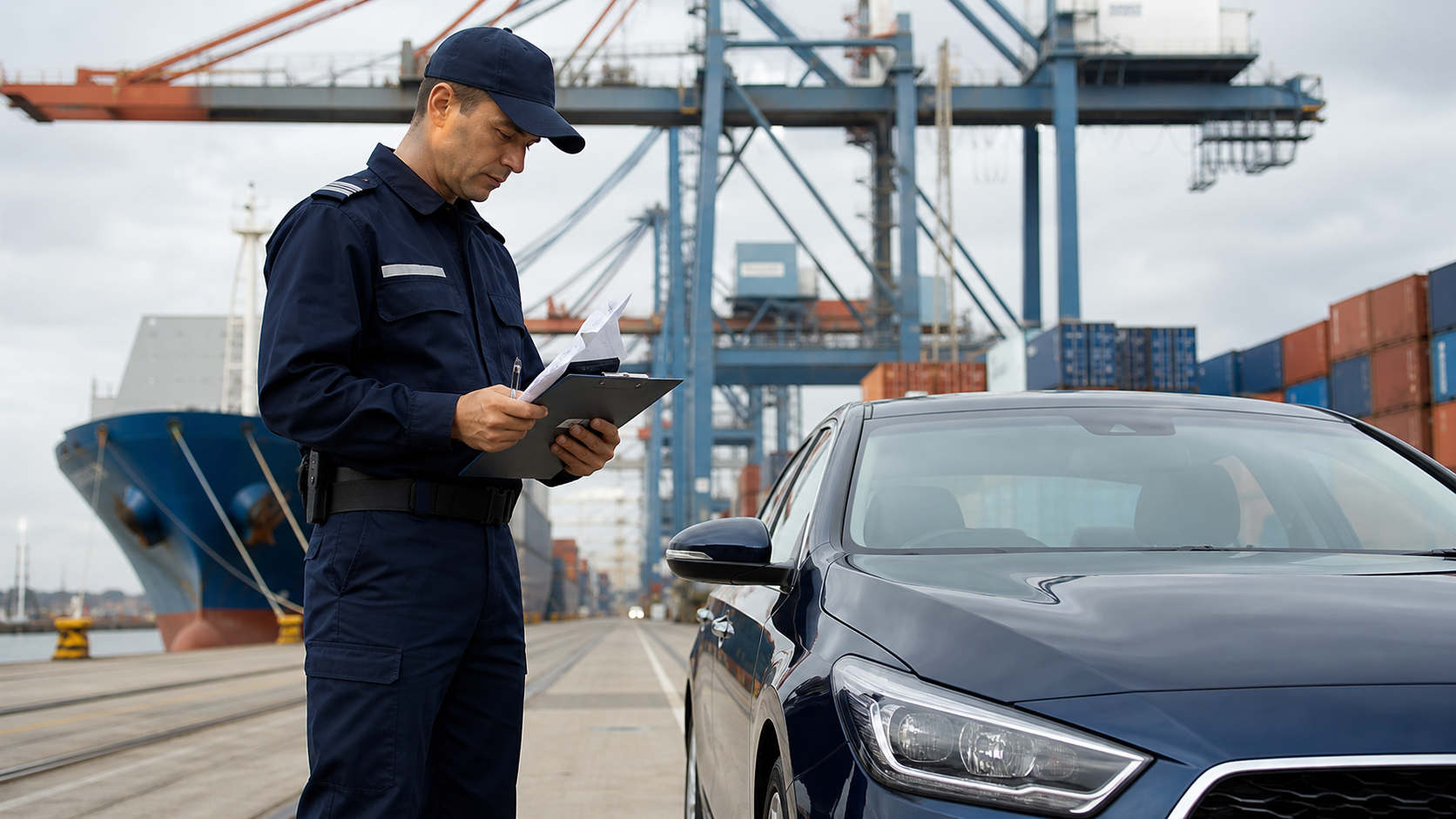
Customs clearance is the stage that causes the most anxiety for first-time importers. It feels opaque and bureaucratic, but it follows a predictable sequence. Here's what actually happens when your car arrives at the destination port.
Step 1: Vessel Arrival and Unloading
When the cargo ship docks, containers are unloaded and moved to the customs inspection zone. For RoRo shipments, vehicles are driven off the ship into a holding area. Your vehicle enters a bonded zone — meaning it's legally on your country's soil but hasn't been "imported" yet.
Step 2: Document Submission
Your customs broker (or you, if doing this yourself) submits the required paperwork:
- Bill of Lading — proof that the vehicle was shipped and to whom
- Commercial Invoice — the auction invoice showing purchase price
- Title / Bill of Sale — proof of ownership
- Packing list — description of the shipped goods
- Insurance certificate — if applicable
The customs authority cross-references these documents against the physical vehicle. Mismatches between the VIN on the title and the VIN on the car, or significant discrepancies in declared value, trigger delays.
Step 3: Value Assessment
Customs calculates your duty and tax based on the CIF value — the combined cost of the vehicle, insurance, and freight. They may accept your declared value or challenge it if it seems unusually low for the vehicle type. Having a legitimate auction invoice from Copart or IAAI is your best defense here — these are recognized, verifiable sources.
Step 4: Duty and Tax Payment
Once the value is assessed, you receive a payment notice for:
- Customs duty (percentage varies by country)
- VAT (calculated on CIF + duty)
- Excise tax (if applicable in your country — often based on engine size or emissions)
Payment must typically be made within a set window — usually 5-15 business days. Some countries allow deferred payment with a bond.
Step 5: Physical Inspection
Not every vehicle is physically inspected, but some are randomly selected or flagged based on risk profiles. Inspection involves verifying the VIN, checking for undeclared modifications, and confirming the vehicle matches its description. This adds 1-2 days when it happens.
Step 6: Release
After payment is confirmed and any inspections are passed, customs issues a release notice. Your vehicle can now leave the bonded zone. From here, it goes to your designated delivery address or a local inspection station for registration processing.
Common Reasons for Delays
- Missing or incorrect documents — the most frequent cause. Double-check everything before the vehicle ships
- Undervalued declaration — if customs thinks you paid more than declared, they investigate
- Restricted vehicle types — some countries require additional certification for diesel vehicles, modified cars, or vehicles over a certain age
- Port congestion — during peak seasons, processing times increase for everyone
Pro Tip
Engage your customs broker before the vehicle ships, not after it arrives. A good broker will review your documents in advance, flag any issues, and have the customs declaration ready to file the moment the vessel docks. This can shave days off your clearance time.
Ready to find your next car?
Browse thousands of vehicles at auction prices with Bid2Doors.
Browse Catalog